An investigation designed to help technical buyers reconsider how they evaluate a recovery solution.
Campaign work · Interactive views reconstruct the kit; display animations illustrate screen concepts.
A welcome page introduces the investigation.
The audience
IT, infrastructure, backup, and recovery leaders at accounts selected for a competitive reconsideration.
The challenge
A recovery solution needed a fair evaluation in competitive accounts. Buyers needed to examine the assumptions and criteria behind a migration decision before considering an alternative.
The idea
Let buyers investigate the criteria first, then reveal an alternative approach chapter by chapter.
What we brought to it
We developed the investigation from narrative through production: the chapter sequence, printed materials, packaging, sourcing, and kit assembly.
Explore the physical experience
Explore the kit’s layers and contents.
Go inside the story, reveal by reveal.
The invitation
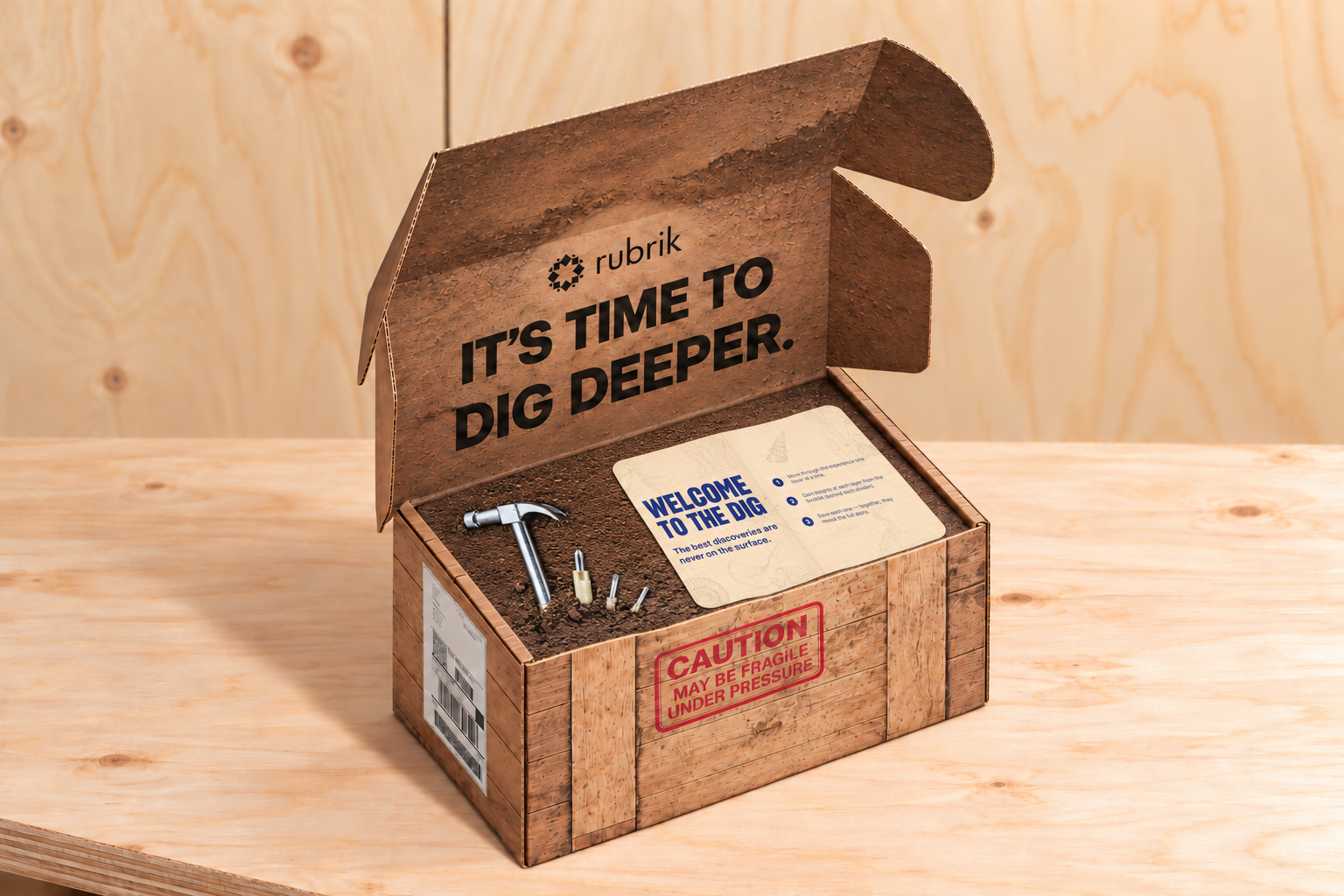
Open the case.
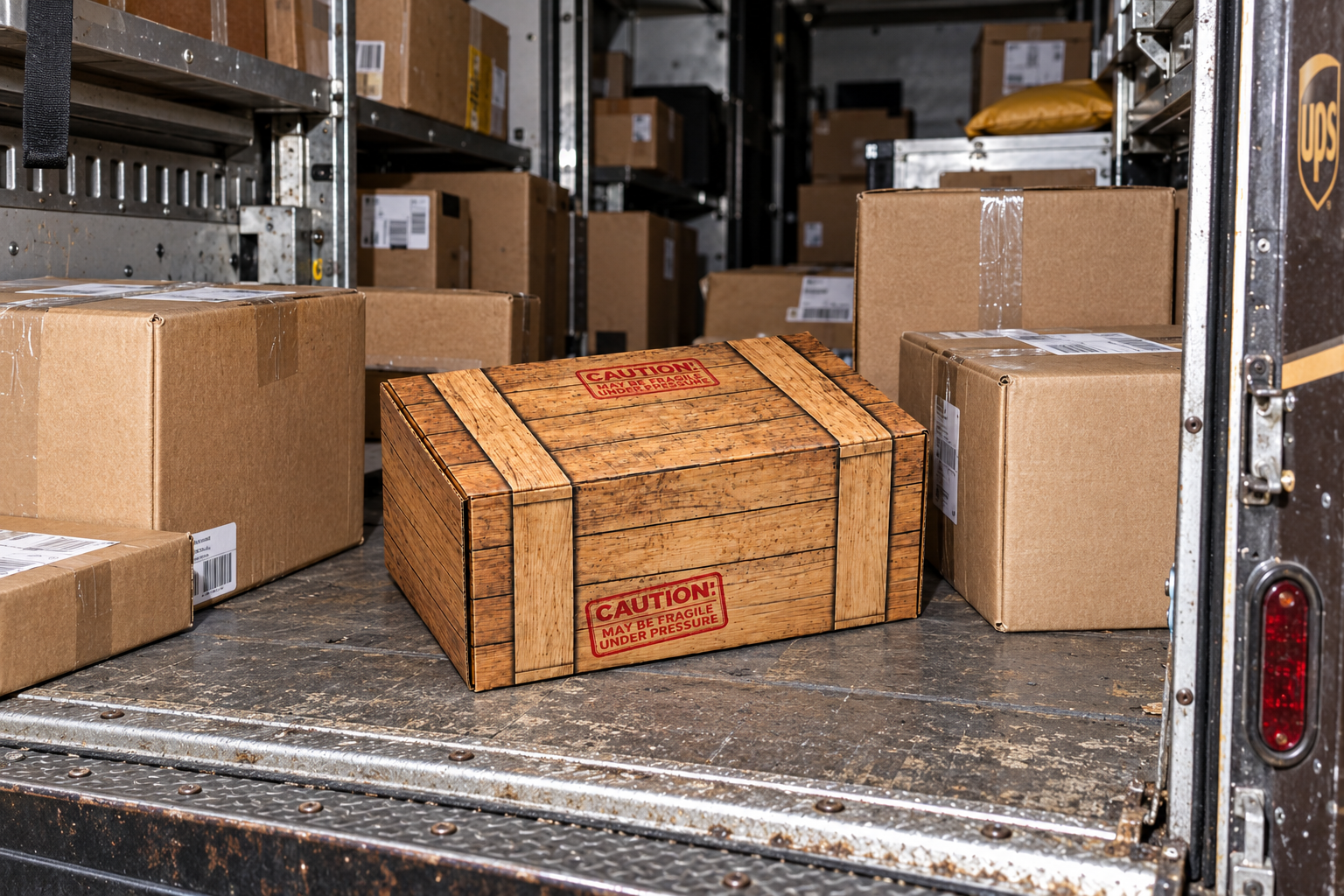
The closed, crate-style mailer made the investigation tangible before the first page was read. Opening it introduced a welcome card and a layered printed guide; a separate toolbox supplied the physical tools.
Instead of starting with a product pitch, the experience asked technical buyers to look more closely at how they would evaluate a recovery decision.
A crate-style mailer invites a closer look.
The chapters
Follow the evidence.
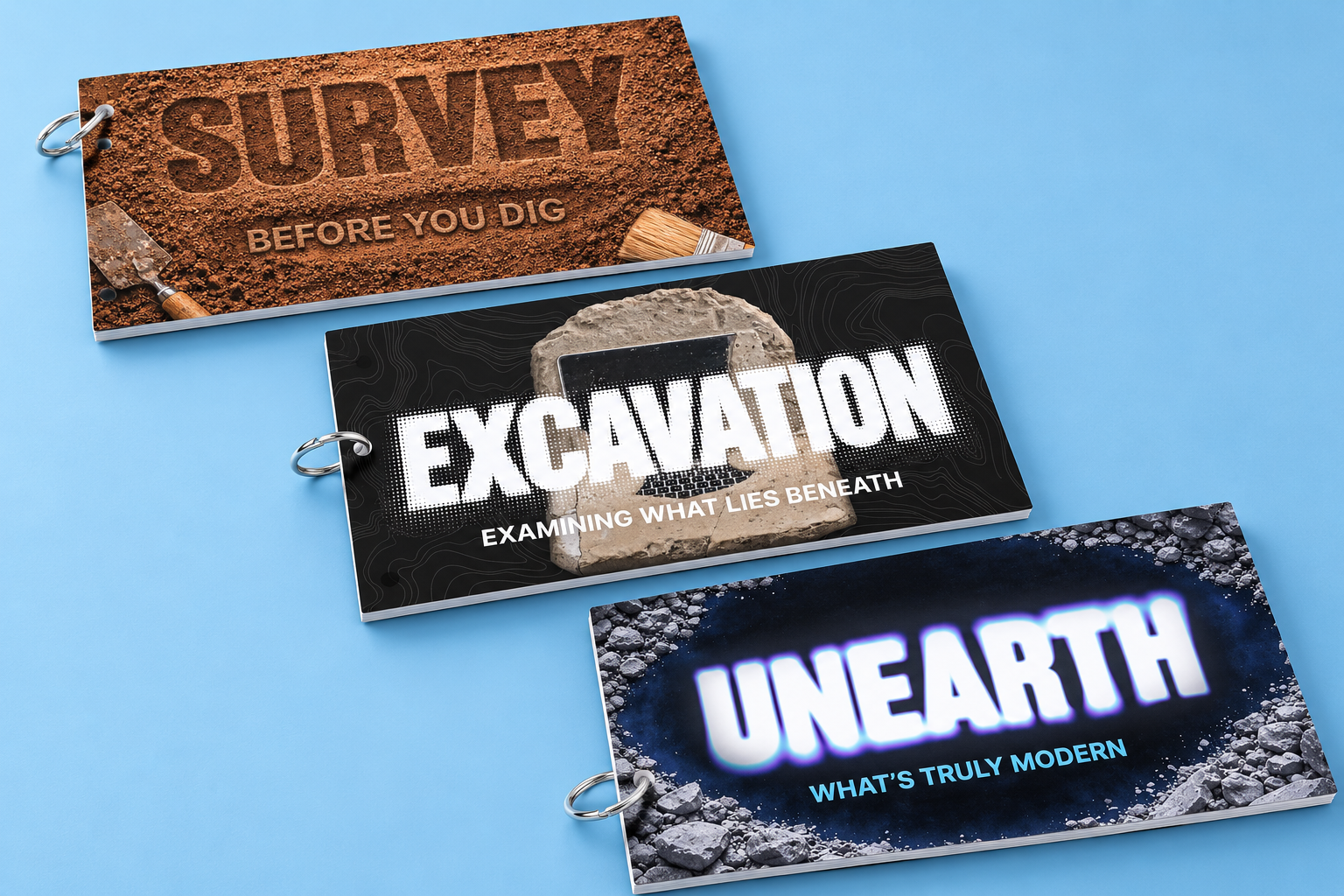
The argument unfolded through three ring-bound booklets, each inside its own printed sleeve. Evaluation criteria gave buyers a basis for comparing approaches; examining inherited assumptions helped frame what needed a closer look. The final chapter then introduced the product’s answer and supporting proof.
SurveySet the evaluation criteria with definitions and diagnostic questions.
ExcavationExamine legacy assumptions, dependencies, and cause and effect.
UnearthIntroduce the product’s differentiators, case studies, and supporting proof.
Survey, Excavation, and Unearth build the story one chapter at a time.
A closer look
Make discovery worth keeping.
The investigation continued beyond the printed chapters. Browse the tools, discoveries and takeaways that made the story something recipients could explore, use and keep.
Scroll or swipe to explore
1 / 4
The fossil
A sealed fossil blind bag adds another discovery beneath the kinetic sand.
A keepsake for everyday
The steel Toyo toolbox gives pens, notes and small essentials a home after the dig.
Multitool + Field Notes
Nested drivers unscrew from the hammer’s handle. Field Notes gives recipients a place for questions and observations.
The geode
The geode carries the invitation to dig deeper into a physical discovery.
The next step
Keep digging.
The printed journey was designed to give sales a useful follow-up question: what would a closer look reveal in this account?
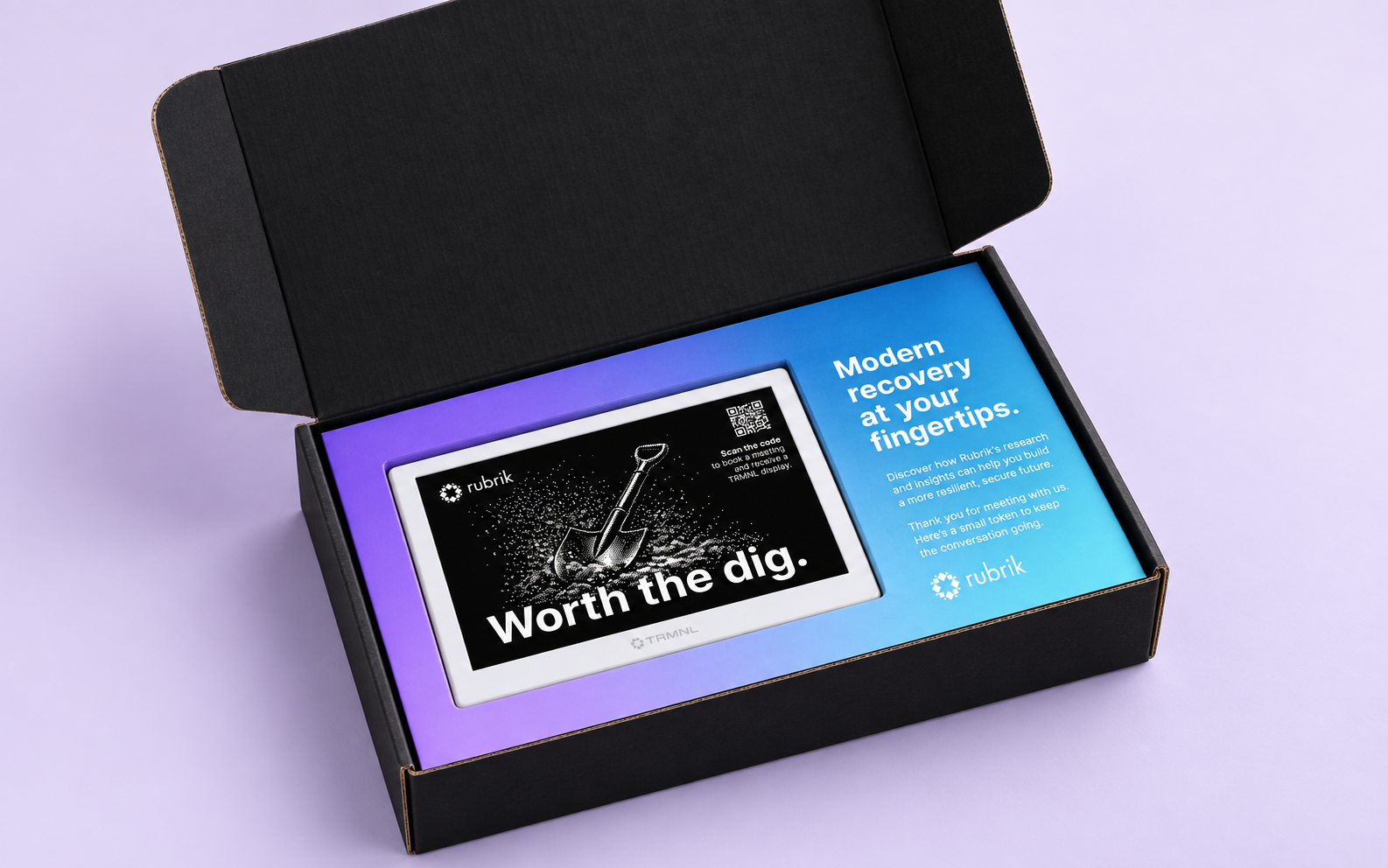
Recipients booked a demo to receive a separate second kit with the TRMNL e-ink display.
Rendered view of the separate meeting-stage kit with a TRMNL e-ink display.
The follow-through
Old-school looks. New possibilities.
The TRMNL display looks like a throwback: a simple monochrome screen in a small desktop frame. Its open-source firmware and customizable screens make it something recipients can keep adapting to their own interests.
That made it a fitting continuation of the investigation: an object that rewards looking beyond first impressions. The campaign splash screen could give way to a calendar, weather, or another useful everyday view.
Calendar, campaign, weather, and tasks—illustrative screen concepts for the TRMNL display.The work, together
Give sales a story to continue.
The printed investigation, physical discoveries and second-kit invitation were designed around one progression: examine the criteria, question the assumptions, then consider the evidence. Howdy carried that structure through narrative, packaging, sourcing and assembly; Sendoso handled campaign fulfillment.
This case study documents the campaign and its two-kit design. Demo conversion and sales outcomes are not reported here.